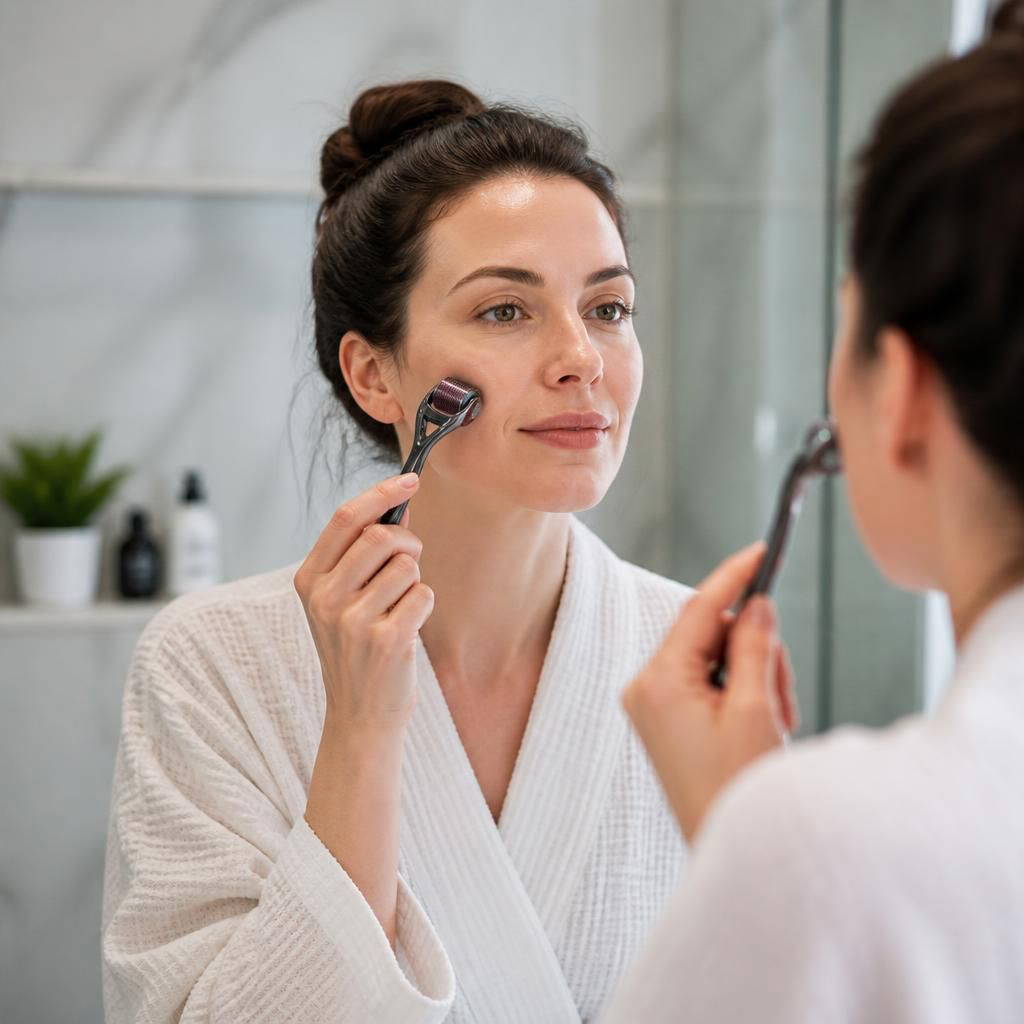

Microneedling dermarollers can indeed be used for home skincare routines, provided they are used correctly and with the appropriate precautions. These devices, designed for personal use, can help improve the texture and appearance of your skin by promoting collagen production and enhancing product absorption. However, it is crucial to follow guidelines on usage frequency and sterilisation to avoid potential skin damage or infection.
Understanding Microneedling Dermarollers
Microneedling dermarollers are handheld devices equipped with tiny needles that create micro-injuries on the skin’s surface. This process stimulates the body’s natural wound healing response, leading to increased collagen and elastin production. As a result, the skin may become firmer and more youthful in appearance. While these devices are commonly used in professional settings, many versions are available for home use, allowing individuals to incorporate microneedling into their regular skincare routine.
Benefits of Home Microneedling
Using a dermaroller at home can offer several benefits, such as enhancing the absorption of skincare products, reducing the appearance of fine lines and wrinkles, and improving skin texture. The micro-channels created by the needles allow active ingredients in serums and creams to penetrate deeper into the skin, maximising their effectiveness. Additionally, regular microneedling sessions can lead to a smoother, more even complexion, making it a popular choice for those looking to address issues like acne scars or enlarged pores.
Safety Considerations
Although microneedling can be a beneficial addition to your skincare routine, it is essential to prioritise safety. Always ensure that the dermaroller is sterilised before and after each use to prevent infection. It is also advisable to start with a needle length of 0.25 mm to 0.5 mm for home use, as longer needles are typically reserved for professional treatments. Moreover, individuals with certain skin conditions, such as active acne or eczema, should consult a dermatologist before attempting microneedling at home.
Getting Started with Dermarollers
For those new to microneedling, it is recommended to begin with a patch test on a small area of skin to assess your skin’s reaction. Once comfortable, follow a consistent routine, typically once a week, while monitoring your skin’s response. Incorporate soothing and hydrating products post-treatment to aid in recovery and enhance results. By adhering to these guidelines, you can safely and effectively integrate microneedling into your home skincare regimen, achieving professional-like results over time.
Microneedling dermarollers are increasingly popular for home use due to their potential to improve skin appearance. When used correctly, they can stimulate collagen production, enhancing skin texture and reducing signs of ageing. However, it’s important to use dermarollers designed for home use, as professional-grade devices may cause skin damage if not handled by trained practitioners.
For optimal results, always ensure proper sterilisation of the dermaroller before and after use. This helps prevent infections and ensures a safe skincare experience. Choose a needle length suitable for home use, typically between 0.25 mm and 0.5 mm, to minimise the risk of adverse effects. Consistent use, complemented by suitable skincare products, can lead to noticeable improvements over time.
While home microneedling can be beneficial, individuals with certain skin conditions should seek professional advice before starting. Consulting a dermatologist can help determine if microneedling is appropriate for your skin type and ensure safe and effective usage.