
Jawline fillers for men can have side effects, although they are generally considered safe when administered by a qualified professional. Common side effects include swelling, bruising, and redness at the injection site. These are typically mild and resolve within a few days. However, more serious complications, while rare, can occur and should be understood before undergoing the treatment.
Common Side Effects
Jawline fillers, like other dermal fillers, may cause temporary side effects such as swelling, bruising, and redness. These are the body’s natural response to the injection process and usually subside within a week. Over-the-counter pain relief can help manage discomfort, and applying a cold compress may reduce swelling. It’s important to follow post-treatment care instructions to minimise these effects.
Less Common Side Effects
While less common, some individuals may experience prolonged swelling or bruising, asymmetry, or lumps under the skin. These can occur if the filler migrates or if the injection technique was not optimal. In such cases, seeking advice from the practitioner who administered the treatment is crucial. They may suggest corrective procedures or additional treatments to address these issues.
Serious Complications
Though rare, serious complications such as infection, allergic reactions, or vascular occlusion can occur. An infection can manifest as increased redness, warmth, or pus at the injection site, while an allergic reaction may cause itching or rash. Vascular occlusion, a blockage of blood vessels, is a critical condition that requires immediate medical attention. Recognising these signs early and consulting with a healthcare professional promptly can prevent further complications.
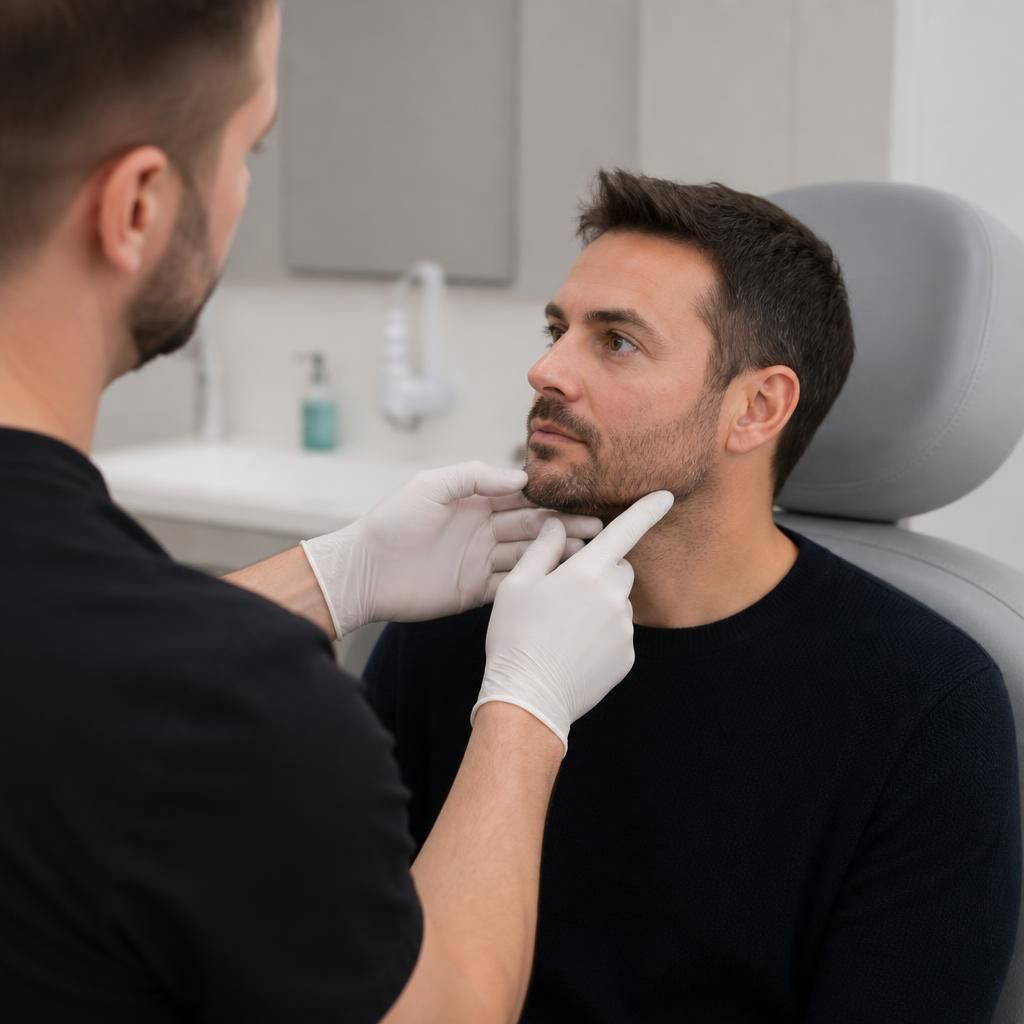
Understanding the potential side effects of jawline fillers for men is crucial for making informed decisions. Swelling, bruising, and redness are common but usually temporary. These effects are part of the body’s natural healing process and typically resolve without intervention.
Less common side effects, such as asymmetry or lumps, require careful consideration and communication with the practitioner. Addressing these issues promptly can ensure the desired aesthetic outcomes are achieved. It’s important to follow all aftercare instructions provided by the practitioner to minimise risks.
While serious complications are rare, they underscore the importance of choosing a qualified and experienced professional for the procedure. Recognising early signs of infection or vascular issues and seeking immediate medical attention can prevent serious health consequences. Being well-informed empowers individuals to make confident choices about their aesthetic treatments.